

Affiliate Disclosure: This post contains affiliate links. If you book or purchase through our links, we may earn a small commission at no extra cost to you. We only recommend services we genuinely trust for budget travelers. Thank you for supporting Travel with Save!
Best Time to Visit Europe on a Budget (Hint: Skip Summer)

Europe is one of the most visited destinations on the planet — and for good reason. From the sun-soaked coastlines of Portugal to the alpine villages of Switzerland, there is something here for every kind of traveler. But if you have ever priced out a summer trip to Paris or Rome in July, you already know the painful truth: peak season in Europe can destroy a budget faster than you can say “gelato.”
The good news? Timing your trip strategically can cut your travel costs by 30 to 50 percent without sacrificing the experience. Nailing the best time to visit Europe is the single biggest lever a budget traveler has. In fact, many seasoned travelers argue that Europe is actually better outside of peak summer. Fewer crowds, more authentic interactions with locals, and significantly cheaper flights and hotels make the shoulder seasons — April through May and September through October — the sweet spot for budget-conscious explorers.
In this guide, we break down the best time to visit Europe month by month, explain exactly why shoulder season is a budget traveler’s best friend, and give you realistic cost estimates so you can plan with confidence. Whether you are dreaming of a first trip to Europe or looking to return without breaking the bank, this article covers everything you need to know.
Why Timing Your Europe Trip Matters for Your Budget
Europe does not have one universal travel season — it has dozens of micro-seasons that vary by region, country, and even city. However, the broad patterns are consistent enough to plan around. High season runs from late June through August when European schools are out, American tourists flood in, and prices surge across the board.
How Much More Does Peak Season Actually Cost?
During peak summer months, a mid-range hotel in Paris or Barcelona can easily run $200 to $350 per night. If Barcelona is on your list, compare Barcelona city tours and Sagrada Familia tickets. That same room in April or October? You are often looking at $100 to $160 per night. Transatlantic flights from major US cities to European hubs can cost $900 to $1,400 round trip in July, while shoulder season flights regularly fall between $450 and $750. The savings stack up fast when you multiply those differences across a two-week trip.
Europe Weather by Month: A Quick Overview
Understanding Europe weather by month helps you match your destination to the right time of year. Western and Southern Europe generally enjoy mild winters and hot summers, while Northern and Eastern Europe experience colder, snowier winters. Here is a simplified overview to guide your planning.
Monthly Weather Summary Table
| Month | General Conditions | Crowd Level | Budget Rating |
|---|---|---|---|
| January | Cold, some snow in north/east; mild in south | Very Low | Excellent |
| February | Cold but improving; carnival season | Low | Excellent |
| March | Warming up; unpredictable rain | Low–Medium | Very Good |
| April | Mild, blooming; occasional showers | Medium | Very Good |
| May | Warm, sunny, long days | Medium | Very Good |
| June | Warm to hot; crowds building | High | Fair |
| July | Hot; peak crowds everywhere | Very High | Poor |
| August | Hot; some locals on vacation | Very High | Poor |
| September | Warm, less crowded; ideal conditions | Medium | Very Good |
| October | Mild, colorful foliage; some rain | Low–Medium | Excellent |
| November | Cool, rainy; Christmas markets begin late month | Low | Very Good |
| December | Cold; festive but pricey in some cities | Medium (cities) | Fair |
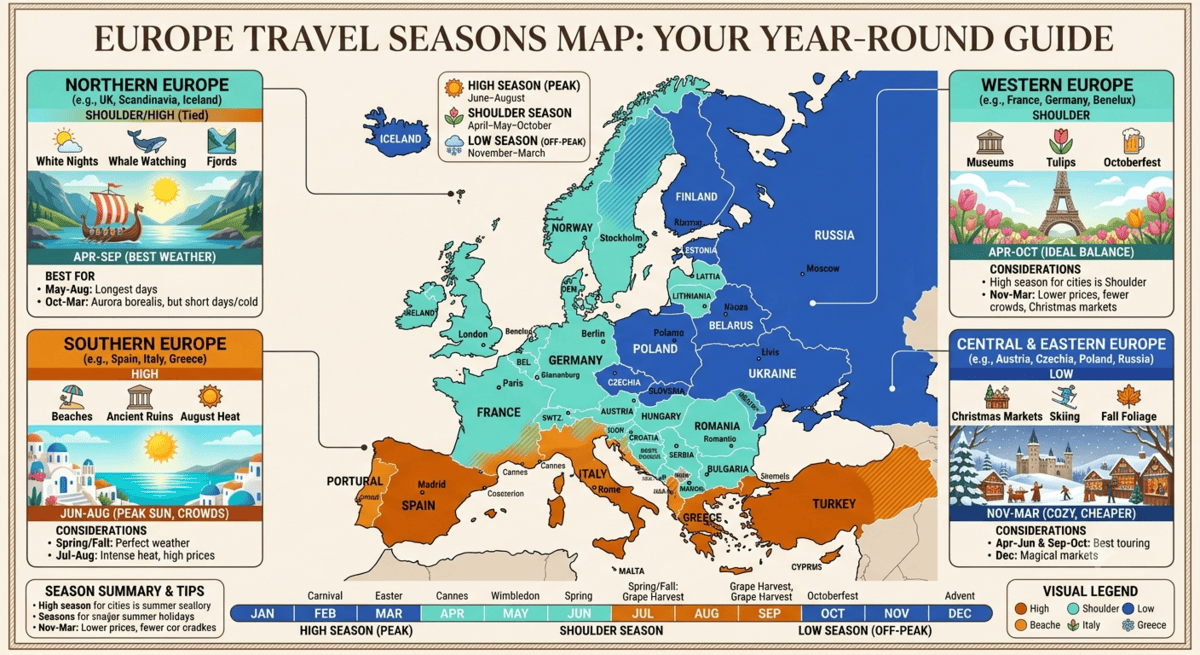
The Best Season to Visit Europe for Budget Travelers: Shoulder Season Wins
If there is one takeaway from this entire guide, it is this: the best season to visit Europe for budget travelers is shoulder season. This means traveling in April and May in the spring, or September and October in the fall. During these windows, the weather is genuinely pleasant across most of the continent, the major attractions are accessible without hours-long queues, and your dollars stretch significantly further.
What Makes Shoulder Season So Special?
Beyond the cost savings, shoulder season offers a more authentic travel experience. Restaurants are not overrun, locals are not worn out by tourist fatigue, and you can actually hear yourself think at the Eiffel Tower or the Colosseum. September in particular is widely considered by frequent Europe travelers to be the single best month to visit — summer warmth lingers, harvests are underway in wine regions, and the school-holiday crowds have gone home. Budget travelers can expect to save $50 to $150 per day compared to a July trip covering the same itinerary.
Spring Shoulder Season: April and May in Europe
April and May are arguably the most underrated months to visit Europe. Temperatures across Western and Southern Europe range from the mid-50s°F to the low-70s°F — perfect for walking tours, outdoor markets, and café culture without sweating through your clothes. Northern Europe, including Scandinavia and the UK, is still cool but increasingly pleasant.
Budget Tips for Spring Travel in Europe
Flights from the US to major European hubs like Amsterdam, Lisbon, and Rome in April and May typically range from $450 to $750 round trip when booked 6 to 10 weeks in advance. Hostels in popular cities run $25 to $45 per night for a dorm bed, while budget private rooms at guesthouses average $70 to $120 per night. Book accommodation early for May, as some popular cities like Amsterdam and Prague see increasing demand from European domestic travelers during this period. Use a hostel-booking site to compare and lock in the best rates before prices creep up.

Fall Shoulder Season: September and October in Europe
September and October are the crown jewels of the Europe shoulder season for budget travelers. Summer heat fades to a comfortable warmth in September, and October brings stunning autumn foliage across Central and Eastern Europe, the Alps, and the Italian countryside. The Mediterranean coast in September still offers beach weather without the August madness.
Where to Go and What to Budget in Fall
September is ideal for the Greek islands, Croatia, and the south of France — all of which see dramatic price drops after August 31. Expect ferry tickets in Greece to cost 20 to 30 percent less than peak season. In October, cities like Prague, Budapest, and Vienna offer exceptional value: budget hotels from $55 to $90 per night, and set-menu lunches at local restaurants for $10 to $15. For finding last-minute fall deals on accommodation, a hotel-booking site frequently offers genius discounts and free cancellation options that are especially useful during this flexible travel window.
Summer in Europe: Worth It Only If You Plan Carefully
We would be doing you a disservice if we ignored summer entirely. June through August is peak travel season for a reason — the weather is reliably warm, daylight hours are long, and festivals are everywhere. If your schedule only allows a summer trip, you can still travel Europe on a budget, but it requires more advance planning and smarter destination choices.
Budget Strategies for Summer Travel
Avoid the most expensive cities in peak summer — Paris, Amsterdam, and Santorini will drain your wallet fastest. Instead, consider Eastern European destinations like Romania, Albania, or North Macedonia where prices remain low year-round. Book flights at least 3 to 4 months ahead for summer and use budget airlines like Ryanair or Wizz Air for intra-Europe routes. A budget flight between major European cities can cost as little as $20 to $60 when booked early. Search and compare budget European flights through a flight comparison site to find the lowest fares across all carriers.

Winter in Europe: The Deepest Discounts of All
January and February represent the absolute cheapest time to visit most of Europe. Flights and hotels drop to their lowest prices of the year, and popular sites like the Louvre, the Vatican Museums, and the Acropolis are nearly empty. The trade-off is cold weather, shorter days, and some seasonal closures at beach resorts and mountain hiking trails.
Best Winter Destinations for Budget Travelers
Cities with vibrant indoor cultures thrive in winter. Lisbon and Porto in Portugal offer mild winters (highs around 55–60°F) and some of the cheapest city-break prices in Western Europe. A budget hostel dorm in Lisbon in January runs $18 to $30 per night. Barcelona and Madrid are also excellent winter choices with mild weather and hotel rates 40 to 50 percent below summer prices. For budget winter city breaks, compare deals using a flight comparison site which specializes in connecting budget flights with flexible routing options.
Regional Differences: Best Time to Visit by European Region
Europe is a continent of enormous diversity. The best time to visit varies significantly depending on which part of Europe you are targeting. Understanding these regional differences prevents costly timing mistakes.
Southern Europe, Northern Europe, and Eastern Europe at a Glance
Southern Europe (Spain, Italy, Greece, Portugal) peaks in July and August but is best visited in May, June, or September for a balance of good weather and lower prices. Compare Rome and Vatican tours to skip the longest lines. Northern Europe (Scandinavia, UK, Ireland) is most pleasant from June through August but shoulder season in May and September still offers decent weather at lower prices. Eastern Europe (Czech Republic, Hungary, Poland, Romania) is enjoyable almost year-round, with spring and fall offering the best combination of mild weather, low prices, and manageable crowds. Budget travelers will find Eastern Europe consistently 30 to 50 percent cheaper than Western European counterparts regardless of season.

How to Book Europe Travel for Maximum Savings
Knowing the best time to visit is only half the equation. Booking strategically amplifies your savings significantly. A few core principles apply regardless of when you travel. Whenever you go, protect the trip with travel insurance so a cancellation or delay does not cost you.
Booking Timelines, Tools, and Budget Hacks
For transatlantic flights, the sweet spot for booking is typically 6 to 12 weeks before departure for shoulder season travel, and 3 to 5 months ahead for summer. Set fare alerts on a flight comparison site to track price movements without constant manual searching. For accommodation, booking 4 to 8 weeks out during shoulder season often captures early-bird discounts while still leaving flexibility. Consider travel insurance to protect non-refundable bookings — a single cancelled flight can cost more than a full policy. Budget travelers spending $1,500 to $3,000 on a Europe trip should expect travel insurance to run $60 to $120 for solid coverage.
Europe on a Daily Budget: What to Expect by Season
One of the most common questions budget travelers ask is: how much does Europe actually cost per day? The honest answer depends heavily on when you go, where you go, and how you travel. A Wise travel money card helps you spend in euros, pounds, and other currencies without heavy conversion fees. Here is a realistic breakdown by season for a budget-style trip covering accommodation, food, local transport, and one paid attraction per day.
Estimated Daily Budget by Season
During peak summer (July–August) in Western Europe, a genuine budget traveler spending carefully can expect to spend $80 to $120 per day. During shoulder season (April–May and September–October) in Western Europe, that same traveler typically spends $55 to $85 per day. In Eastern Europe during shoulder season, daily budgets of $35 to $55 are very achievable. Winter travel in Southern or Eastern Europe can push that figure as low as $30 to $50 per day. These estimates assume staying in hostels or budget guesthouses, eating at local restaurants and markets, and using public transportation.
Frequently Asked Questions About the Best Time to Visit Europe
What is the absolute cheapest month to visit Europe?
January is generally the cheapest month to visit Europe overall, with the lowest flight prices and hotel rates of the year. February is a close second. If you can handle cold weather and shorter days, you will find exceptional deals, especially in cities like Lisbon, Madrid, Budapest, and Prague.
Is September or May better for a first trip to Europe?
Both are excellent choices, but September edges ahead for first-timers. The weather is warmer and more reliable, the days are still long, and you benefit from post-summer price drops. May is ideal if you want spring blooms and prefer slightly cooler temperatures for heavy sightseeing days.
How far in advance should I book a Europe trip during shoulder season?
For shoulder season travel, booking flights 6 to 10 weeks in advance typically yields the best prices. Accommodation can often be booked 4 to 6 weeks out without significant cost penalties, especially in October when demand is lower. Always set price alerts to catch sudden fare drops.
Is Europe too crowded in October?
No — October is one of the least crowded months at most major European attractions. School holidays are over, the summer tourist wave has passed, and only dedicated travelers remain. Lines at top sites like the Colosseum, the Sagrada Familia, and the Louvre are dramatically shorter than in July or August.
What is the best time to visit Europe for warm beach weather on a budget?
September is the sweet spot for budget beach travel in Europe. The Mediterranean Sea is still warm from summer, temperatures in coastal areas of Greece, Croatia, Spain, and Portugal hover in the mid-70s°F to low-80s°F, and prices have already dropped from their August peak. You get the beach experience without the peak-season price tag.
Can I visit multiple countries in Europe during shoulder season affordably?
Absolutely. Shoulder season is actually ideal for multi-country itineraries because budget airline seats are more available and less expensive. Intra-Europe budget flights between cities can cost $20 to $80 when booked a few weeks ahead. Overnight trains and buses are also cheaper and easier to book outside of peak summer, making a multi-country Europe trip very manageable on a budget of $60 to $90 per day in Western Europe.
Conclusion: Time Your Europe Trip Right and Keep More Money in Your Pocket
The best time to visit Europe is not when everyone else goes — it is when your budget works hardest for you. The shoulder seasons of April through May and September through October consistently deliver the best combination of pleasant weather, manageable crowds, and affordable prices across the continent. Whether you are exploring the sun-drenched streets of Seville in October, hiking the Cinque Terre trails in May, or sipping wine in a Lisbon café in September, you will spend significantly less and experience significantly more than the peak-summer crowd ever does.
Start planning your shoulder season Europe adventure today. Set those fare alerts, pick your target months, and let your budget work smarter. For more help building a complete Europe itinerary without overspending, check out our for step-by-step planning advice tailored to travelers who want to see it all without going broke.